

Spinago casino Plinko
Introduction
When I look at why certain casino products break out faster than others, I usually find the same pattern: the rules are easy to grasp, the action starts instantly, and the result is visible in a way that feels almost physical. That is exactly why Spinago casino Plinko deserves a closer look. On the surface, Plinko is simple. You drop a ball from the top of a pegged board, it bounces left and right, and it lands in a prize slot with a multiplier attached. But in practice, this is one of those formats where a minimal interface hides a surprisingly distinct rhythm, a very specific risk profile, and a style of play that is not at all comparable to a standard slot session.
For players in Australia and elsewhere who want to understand whether Plinko is actually worth trying, the key point is this: it is not just a casual side game with random movement on screen. It is a fast, variance-driven casino format built around repeated drops, visible probability distribution, and strong emotional contrast between many small results and occasional high multipliers. That combination explains why Plinko has become so noticeable across modern gambling platforms.
In this article, I will focus strictly on the game itself: how Plinko works, why it feels different from reels-based products, what the risk settings really change, and what a player should understand before starting a real-money session at Spinago casino. My goal is not to oversell it. It is to explain what this game genuinely offers, where the tension comes from, and where caution matters.
What Plinko is and why it attracts so much attention
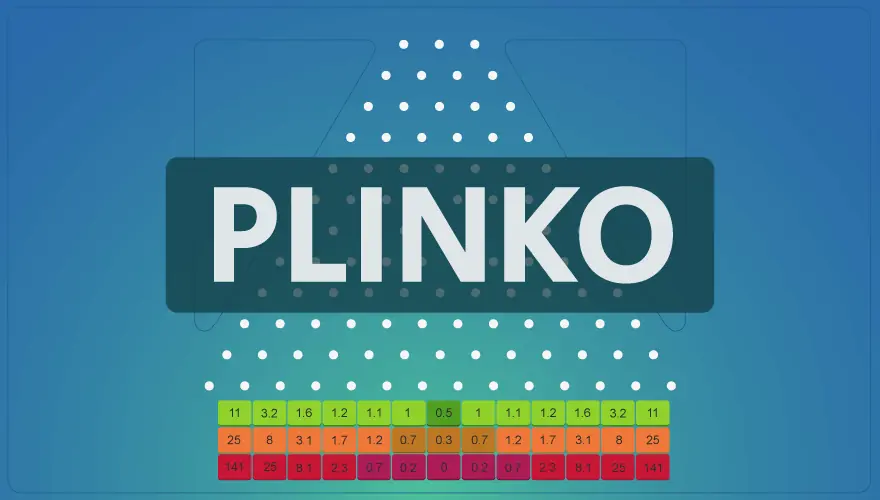
Plinko is a ball-drop gambling game built around a very clear visual idea. A player chooses a stake, often selects a risk level, sometimes adjusts the number of rows, and then releases a ball from the top of the board. As the ball falls, it hits pegs and changes direction until it lands in one of several slots at the bottom. Each slot carries a multiplier. The final return depends entirely on where the ball ends up.
That description sounds almost too basic, and that is part of the appeal. Unlike many top Spinago Casino games before depositing real money that require players to decode paylines, bonus symbols, side bets, or table strategy, Plinko explains itself in seconds. You do not need a long learning phase. You see the board, you see the possible multipliers, and you understand immediately that the centre tends to represent common lower returns while the outer edges usually hold the rare but much larger outcomes.
What makes Plinko especially noticeable is the way it turns randomness into something visible. In a slot, the random number process is hidden behind spinning reels and symbol stops. In Plinko, the uncertainty appears embodied in the ball’s path. Players can watch every deflection, every near-miss, every drift toward a high-value edge before the ball cuts back into a lower-paying zone. That visual journey creates suspense that feels direct and easy to follow.
I would highlight one observation that often gets missed in generic reviews: Plinko does not merely show the result; it stages the uncertainty in front of the player. That is a major reason why the format stands out. The movement itself becomes part of the entertainment, even though the outcome is still determined by the game’s underlying random logic.
Another reason for its visibility is pacing. A single drop resolves quickly, which makes the game attractive to players who want fast repetition. Yet each round has enough visual motion to feel more eventful than a simple instant-win interface. That balance between speed and spectacle gives Plinko an unusual place among casino games.
How the Plinko mechanic actually works in a real session
At the practical level, the Plinko mechanic is built on repeated independent rounds. Each round starts when the player sets a bet and drops a ball. The ball then travels through a field of pins, bouncing left or right until it reaches the bottom. The slot where it lands determines the multiplier applied to the stake.
Most versions of Plinko, including the style players expect to see at a modern platform like Spinago casino, revolve around three adjustable elements:
- Bet size — the amount staked on each drop.
- Risk level — usually low, medium, or high, affecting multiplier distribution.
- Board depth or rows — in some versions, more rows mean a wider result spread and different probability shaping.
The most important of these is the risk setting. This is where many newcomers make a wrong assumption. They think “higher risk” simply means “better potential return.” That is only half true. In reality, a higher-risk setup usually compresses the common outcomes and stretches the extreme ones. In plain English, you are more likely to see modest or poor returns repeatedly while chasing rarer large multipliers. Low-risk mode tends to cluster results more tightly, producing a steadier but less explosive session.
Here is a simplified view of how those settings affect the experience:
| Setting | What changes on the board | What it means in practice |
|---|---|---|
| Low risk | Multipliers are distributed more conservatively | More frequent modest returns, fewer dramatic swings |
| Medium risk | Balance between common results and stronger edge values | Mixed session flow, moderate volatility, broader result spread |
| High risk | Extreme multipliers move further to the edges, central values become less forgiving | Longer dry runs are possible, but rare spikes can be very large |
The ball’s movement looks physical, but a player should not mistake visible bouncing for controllable influence. You are not steering the result. You are observing a randomised path represented through physics-like animation. That distinction matters because Plinko can create the illusion that the ball was “close” to a better slot in a meaningful way. Emotionally, that feels important. Mathematically, the round is simply the round.
This leads to another useful observation: Plinko is one of the clearest examples of a game where visual near-misses can affect player behaviour even when they do not change actual probability. If you tend to chase outcomes after seeing the ball brush past a big multiplier, that is something to watch carefully.
Why the game feels engaging and how its pace shapes the experience
The reason Plinko holds attention is not just randomness. It is the combination of short cycle time, visible suspense, and adjustable intensity. Each drop is over quickly, but not instantly. There is a small window where the player watches the path unfold, and that window is enough to create anticipation. Then the next round can begin almost immediately.
That rhythm has practical consequences. In a slot session, especially on feature-heavy products, the tempo may vary because base spins, bonus triggers, and animations interrupt the flow. In Plinko, the loop is much cleaner: stake, drop, result, repeat. For some players, that feels refreshing. For others, it can become deceptively intense because there is very little friction between one decision and the next. For a closer look at the games library, Spinago Casino Gates of Olympus slot review sorts the titles by theme and pace.
I often describe Plinko as a “compressed session” game. What might take ten or fifteen minutes to emotionally build in a slot can happen in a much shorter span here. A sequence of ordinary returns, followed by one strong hit, followed by another run of low outcomes, can occur in rapid succession. This makes bankroll movement feel faster, even when the individual stake is modest.
One practical takeaway is simple: if you play quickly, Plinko can burn through a budget faster than its clean interface suggests. The board looks calm. The session often is not. Mobile players should have a look at returning player bonus codes overview before installing anything.
That contrast between visual simplicity and emotional intensity is one of the format’s defining traits. There are no expanding wilds, no cinematic bonus rounds, no layered reel sets. Yet the tension can be very real because every drop carries a clear and immediate result, and because the player always sees the high multipliers sitting at the edges like visible targets.
How risky Plinko really is and who will feel comfortable with it
Plinko can range from relatively controlled to highly aggressive depending on the settings, but in general I would not classify it as a low-pressure gambling format. Even in lower-risk configurations, the game is built around repeated random outcomes with no strategic correction mechanism. You cannot grind out an edge through decision-making. Your influence is limited to stake size and setup choices.
The biggest source of risk is not complexity. It is variance. In high-risk mode especially, the distribution of outcomes becomes much harsher. The appeal is obvious: the top multipliers can be substantial. The trade-off is equally obvious once you spend time with the game: many drops may return little or nothing meaningful before a standout result appears.
This makes Plinko suitable for certain player profiles and less suitable for others:
- It suits players who enjoy short, high-clarity rounds and are comfortable with swings.
- It suits players who prefer visible randomness over abstract reel outcomes.
- It may suit players who like adjusting risk settings to shape session intensity.
- It does not suit players looking for deep strategy, because there is almost none.
- It may not suit players who chase losses easily, since fast repetition can amplify impulsive decisions.
If you are the kind of player who enjoys method, pacing, and layered mechanics, Plinko may feel too stripped down. If you want quick rounds with clear stakes and immediate results, it can be highly appealing. The key is to understand that simplicity here does not mean softness. In many sessions, especially at higher settings, the experience is sharper than it first appears.
What players should understand about probability, distribution and possible outcomes
One of the strongest reasons to approach Plinko with a clear head is that the board itself invites assumptions about fairness and frequency. Players naturally look at the bottom row and think in visual terms: “There are many middle slots, so those must hit more often,” or “the outer multipliers are there, so they will come eventually.” The first idea is broadly aligned with how distribution works. The second is where many players get into trouble.
In most Plinko models, the probability curve favours central landing zones. That means lower or moderate multipliers usually appear more often than edge outcomes. The largest returns are typically placed where the ball is least likely to finish. This is not a hidden catch. It is the core structure of the game.
What matters in practice is how that structure affects expectation. A board can display an exciting top multiplier, but if the probability of reaching it is extremely small, that number should be treated as a rare event, not as a realistic session target. This is especially important for players who come from slots and assume that a visible top reward is something they are “due” to see after enough rounds. Plinko does not work that way.
Here is a practical breakdown of what to keep in mind:
| Point to understand | Why it matters |
|---|---|
| Most results cluster away from the extreme edges | The biggest multipliers are usually rare by design |
| Risk settings alter distribution, not just mood | Your session profile changes materially when you switch modes |
| Fast rounds can distort perception | Players may underestimate how quickly variance affects bankroll |
| Near-misses are emotionally powerful but not predictive | A ball landing close to a top slot says nothing about the next drop |
I would add a third observation that separates experienced play from impulsive play: in Plinko, the board teaches the right lesson only if you read it statistically, not emotionally. If you read it emotionally, every edge bounce feels like a signal. If you read it statistically, you understand that the centre-heavy distribution is the real story.
How Plinko differs from slots and other mainstream casino games
Although Plinko is often grouped into the wider online casino catalogue, its feel is quite different from classic slots, roulette, blackjack, or crash-style products. The difference is not only cosmetic. It changes what the player is actually doing from round to round.
With slots, the experience is built around symbol combinations, paylines, features, and bonus layers. There is often a long-term rhythm between base gameplay and occasional special rounds. In Plinko, there are no reels to decode and no feature cycle to wait for. Each drop is self-contained. The tension is concentrated into the descent and the landing slot.
Compared with roulette, Plinko also feels different despite the shared element of randomness. Roulette asks the player to choose from a betting layout before a binary-style resolution path unfolds. Plinko instead asks the player to accept a distribution model and watch the path play out visually. The suspense is more kinetic. The decision-making is lighter.
Compared with blackjack, the contrast is even stronger. Blackjack includes meaningful choices that can influence long-term efficiency. Plinko offers no such strategic depth. Once the ball is dropped, the player is an observer.
Compared with crash games, Plinko is less about timing nerve and more about accepting preset variance. You are not cashing out manually at the right moment. You are choosing a risk environment and letting the round resolve.
That leaves Plinko in a distinct position:
- more visual than many instant-win formats,
- faster and cleaner than feature-heavy slots,
- less strategic than table games,
- more distribution-driven than most casual casino products.
This is why some players become repeat users of Plinko while others lose interest quickly. If you need narrative progression, theme, symbols, and bonus structure, Plinko can feel too bare. If you want direct action with transparent outcome logic, it can feel refreshingly honest.
Practical strengths and weaker points of the format
Every casino product has trade-offs, and Plinko is no exception. Its strengths are real, but so are its limitations. Looking at Spinago casino Plinko through a practical lens, I would frame them like this.
Strong points:
- Immediate clarity. A new player can understand the core concept almost instantly.
- Fast session flow. There is little downtime between rounds, which suits players who dislike slow pacing.
- Visible probability structure. The board itself communicates that central outcomes are common and edge outcomes are rare.
- Risk customisation. Different settings can materially change the feel of play.
- Strong suspense per round. Even a short drop can produce a genuine sense of anticipation.
Weaker points and limits:
- Low strategic depth. If you want decision-based gameplay, Plinko offers very little.
- Potentially harsh swings. High-risk configurations can produce long stretches of weak returns.
- Fast bankroll turnover. The speed of repetition can lead to larger spend than expected.
- Repetition fatigue. Some players may find the loop too uniform over time.
- Psychological pressure from near-misses. The visual path can encourage chasing behaviour.
None of these points should be ignored. In fact, the best way to judge whether Plinko suits you is to decide which side of that list matters more. For some players, the stripped-back structure is exactly the attraction. For others, it is the reason the format lacks staying power.
What to check before launching a Plinko session at Spinago casino
Before starting a session, I would recommend paying attention to a few practical details. These are not abstract tips. They directly affect how the game will feel and how your bankroll may behave.
- Check the risk level before the first drop. Do not assume the default setting matches your style. A high-risk board can feel dramatically different from a low-risk one.
- Understand the multiplier map. Look at where the top values sit and how much of the board is occupied by low-return zones.
- Set a round budget, not just a money budget. Because drops are fast, a fixed number of rounds can be a useful control tool.
- Use demo mode if available. It helps you understand rhythm and variance without financial pressure.
- Avoid reading patterns into recent drops. Short-term sequences can be emotionally persuasive but mathematically meaningless.
That last point is especially important. Plinko’s visual design can tempt players to believe that certain lanes are “heating up” or that a big edge result is “coming.” In a properly run random game, that kind of pattern reading is not a reliable basis for decisions. If you approach the board as a source of signals, you may end up increasing stakes for the wrong reasons.
What helps most is to define your purpose before you begin. Are you using Plinko for short bursts of high-energy play? Are you testing different risk settings with small stakes? Are you looking for a low-effort alternative to slots? Once you know that, it becomes easier to keep the session aligned with your expectations instead of letting the game’s pace dictate your behaviour.
Final verdict
Spinago casino Plinko offers a very specific type of gambling experience: fast, visually transparent, easy to start, and capable of producing sharp swings in a short time. Its strongest quality is not complexity but clarity. You see the board, you understand the basic objective, and you feel the tension of each drop immediately. That directness is a major advantage for players who want action without layers of slot-style structure.
At the same time, the format deserves more respect than its simple appearance suggests. Plinko may look casual, but the underlying session dynamics can be intense, especially when higher-risk settings are involved. The game’s appeal comes from visible uncertainty and the possibility of rare large multipliers. Its main danger comes from exactly the same place. Fast repetition, emotional near-misses, and uneven result distribution can push a session off balance if the player treats the board as more controllable or more predictable than it really is.
Who is it for? I would say Plinko is a good fit for players who enjoy quick rounds, clear mechanics, and a strong sense of suspense without needing strategic decision-making. Who may want a different format? Players who prefer deeper gameplay, slower pacing, or more structured bonus progression will probably get more from slots or table games.
If I reduce it to one honest conclusion, it is this: Plinko is not a replacement for every casino style, but within its lane, it is one of the cleanest examples of how a simple concept can create real tension. Try it if you want direct, variance-driven play and you understand what that means. Approach it carefully if you are sensitive to fast bankroll swings. That is the real value of the game, and also the real warning attached to it.
FAQ
How do Plinko ball drops work, and what do the multipliers mean?
A ball drops through the board and bounces into one of the outcome slots. Each slot carries a multiplier that determines the game result. The final multiplier shown at the landing area is what is applied for that round.
What risk level is typical for Plinko, and how should volatility be approached?
Plinko outcomes can swing quickly because the ball can end in widely different multiplier slots. Higher volatility means results may vary more between rounds. A paced bankroll approach and shorter sessions help keep control of risk.
Which common beginner mistake should be avoided when launching Plinko for real-money play?
Players sometimes jump into real-money play without checking the selected bet or round settings. Another common issue is expecting the ball to follow a pattern. Plinko is based on random outcomes per round, so reviewing the current bet before launching is the safest habit.
What should be checked before claiming free spins or a similar offer for Plinko?
Players should confirm the game eligibility for Plinko and whether the offer requires a deposit or a specific wager. It also helps to check the wagering conditions and the time window for use. Keeping the correct promo status active before launching the next round is key.
How does the current mirror or working mirror work for accessing Plinko?
The site may provide a current mirror or working mirror when access varies by network or region. Using the mirror that’s marked active on the site helps open the game lobby and launch Plinko normally. If one mirror fails, switching to the next working option can restore access.
What terms apply to Plinko rounds regarding limits, betting rules, and session behavior?
Betting and play may be subject to table limits and responsible play measures. Some promos also come with wagering requirements that affect how results count. Checking the in-game rules and the promotion terms before increasing bet size helps keep play within limits.
After a deposit, where does the cashier show payment status for Plinko-related offers?
The cashier section displays the current deposit status and available payment methods. Once a deposit is confirmed, eligible promotions tied to deposit conditions can be activated based on the rules. If the offer does not appear, checking promo status and transaction status in the cashier is the next step.